

The Urasenke Tea School: how (not) knowing its message led me to create matchin’
Some discoveries begin with taste. For me, it began… with a question. Why is matcha the same green powder velvety, sweet, and “clean” in one bowl, yet grassy, bitter, and heavy in another? And why was it that the more I searched for high-quality matcha, the less it was about a drink and the more it became about something hard to name, but easy to feel?
Only later did I understand that, through matcha, I had found its true purpose. And how beautiful that is: matcha itself showed me what it truly means. The guiding thread that helped me make sense of it all, I found in Kyoto, in the tradition of the Urasenke tea school.
It was this very path from wonder, through uncertainty, to understanding that led me to create matchin’.
What is the Urasenke school?
Urasenke is one of the main schools of the Japanese tea ceremony (sadō), rooted in Kyoto and carrying on a tradition in which tea is a tool for practicing mindfulness, respect, and simplicity not only while preparing tea, but also in everyday life.
In short: Urasenke doesn’t teach a “spectacular ceremony.” It teaches a way of being. It’s a way of thinking about daily life in which even the smallest gesture matters because it is done consciously, with care for the guest and for the moment.
And this is important: when we hear “tea ceremony,” it’s easy to imagine a ritual for the initiated. But at its heart, it is a practice of presence. And matcha is its center not because it must be “perfectly prepared,” but because it is meant to lead us toward calm.
Learning tea through family roots
In my family, there is someone who has lived in Japan for 25 years and has attended the Urasenke school for over 20. Thanks to him, this tradition wasn’t just a distant story from Kyoto it became something real: a living practice.
And it was from him that I heard something that completely changed how I looked at matcha: that in Urasenke, the foundations begin not with the ceremony itself, but with… the person.
What does learning in Urasenke look like?
Most often it’s once a week, in a small group, under the guidance of a teacher (sensei). No pressure. No rush. It’s study for years, because the longer you practice, the more you understand.
And here’s what matters most: at the beginning, you don’t learn the ceremony.
You learn what our culture often overlooks because it seems “too simple”:
-
how to sit,
-
how to move,
-
how to hold the bowl,
-
how to show respect to the guest,
-
how to treat objects—the bowl, the chasen (bamboo whisk), the natsume (tea caddy) as something that co-creates the moment.
These seem like small details. And yet they shape the atmosphere and the taste of the experience.
Principles of movement and “quiet” natural, quiet, gentle
In Urasenke, gestures are meant to be natural, quiet, and gentle:
-
you avoid sounds and clinking dishes,
-
hands are “aesthetic” (no splayed fingers),
-
gentleness matters more than force.
And if you must make a “tap” (for example, to shake off leftover powder), it should be brief and controlled done with heart, not with strength.
The same sequence of movements is repeated many times until it becomes natural. Then come additional forms, different utensils, different seasons, different guests. You begin to see it’s not theater. It’s training in mindfulness.
And that’s when I asked myself: if matcha is part of this philosophy, how could I keep looking for “good matcha” only by the color of the powder and marketing slogans?

The foundation that explains everything:
The Book of Tea
The same person recommended The Book of Tea by Okakura Kakuzō. And there, one line—or rather one idea—struck me and stayed with me forever:
Teaism is not about tea; it is about a way of life in which small things become art when we do them with attention.
That was exactly what resonated in our conversation about Urasenke. Because in this tradition, matcha is not just a drink. It is:
-
order,
-
quiet,
-
the aesthetics of movement,
-
and the principle that after each stage, everything returns to its “first form.”
What is “dirty” the behind-the-scenes of the process os not displayed to guests. Not because it is shameful, but because the guest is meant to receive space for calm, not chaos.
And then it clicked: high-quality matcha carries that same order within it clarity of taste, no aggressive bitterness, gentleness, and a long, soft finish. It doesn’t shout. It’s calm.
How Urasenke taught me to understand “high-quality” matcha
Today, when someone asks me how to recognize high-quality matcha, I answer differently than I used to.
Of course: origin, freshness, cultivation, stone-milling, and flavor profile all matter. If you’re choosing ceremonial-grade matcha, you look for:
-
a smooth texture,
-
natural sweetness and umami,
-
minimal astringency,
-
a fresh, “green” aroma yet not grassy.
But there’s something deeper, too: high-quality matcha gives you an experience that calms rather than overstimulates. And that is exactly what Urasenke calls the purpose.
Not perfection. Presence.
Matcha showed me its true meaning—and that’s how matchin’ was born
When I understood this, I stopped searching for matcha that was simply “pretty” or “trendy.” I began looking for matcha that carries the same idea: gentleness, mindfulness, respect for the process.
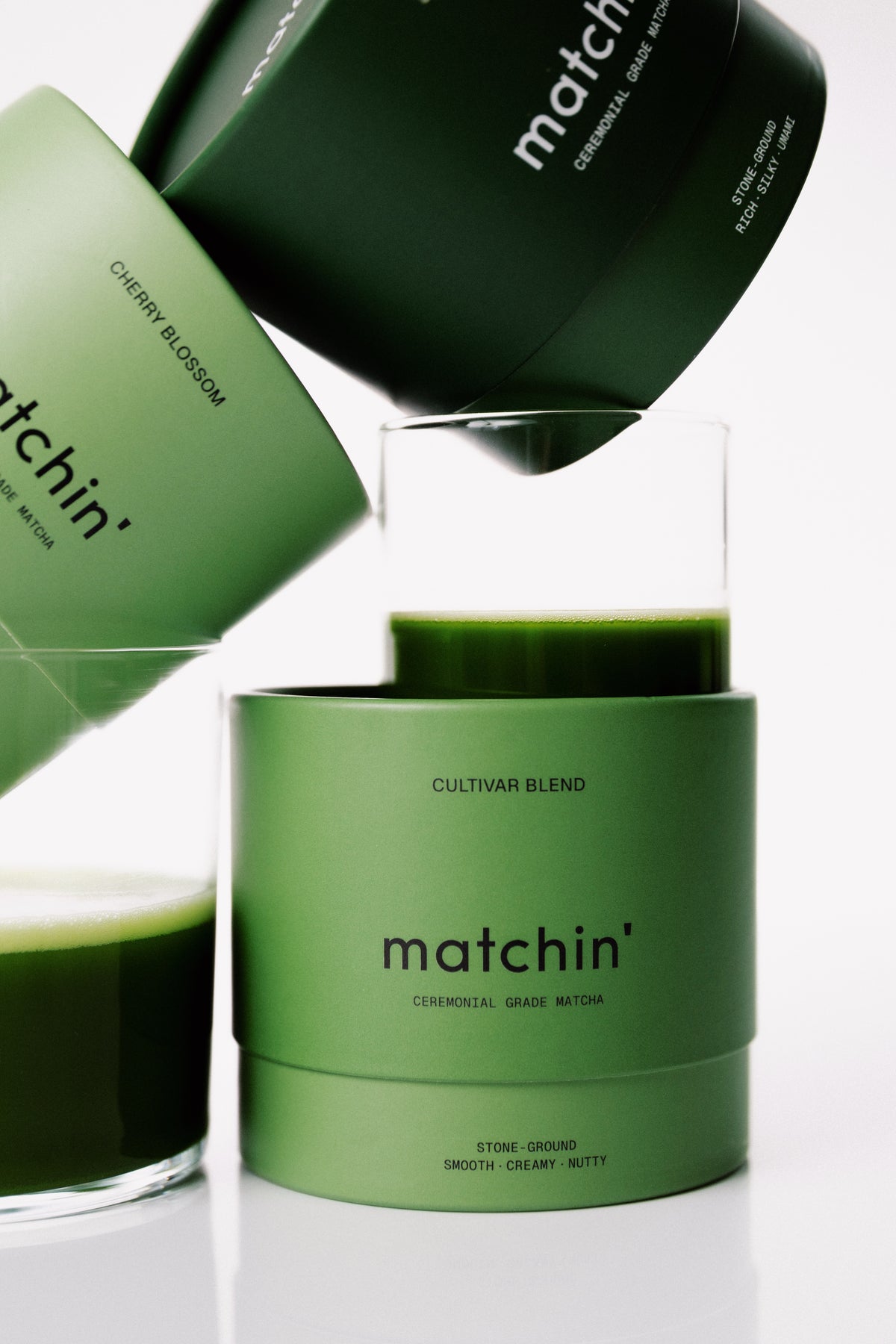
And that’s why matchin’ was created.
Because I wanted to create a place where matcha from Japan truly good, carefully selected wouldn’t be just a product. It would be an invitation: to slow down, to care for yourself, to a small ritual that brings order to the day.
You don’t need to know the ceremony. You don’t need to do everything “perfectly.” You just need to give yourself a moment and good matcha will do the rest.
A small ritual to begin (no pressure, in the spirit of Urasenke)
If you want to start in your own way:
-
Pause for 30 seconds before you do anything.
-
Prepare your bowl and chasen calmly, without rushing.
-
Notice the sounds try to keep everything quiet and gentle.
-
When you’re done, wash your tools and set them down as if you’re “closing” the day in order.
-
Take the first sip with full attention.
That’s enough to feel what it’s really about.
In the end: what is matcha really for?
For me, the answer didn’t come from a definition, a trend, or even health benefits.
It came from practice, understanding, and the need for ritual: matcha is here so we can return to ourselves. To quiet. To simplicity. To mindfulness.
And if that’s the kind of matcha you’re looking for high-quality matcha that tastes not only “good,” but also “clean”—then that is exactly the direction matchin’ is meant to take you.
